

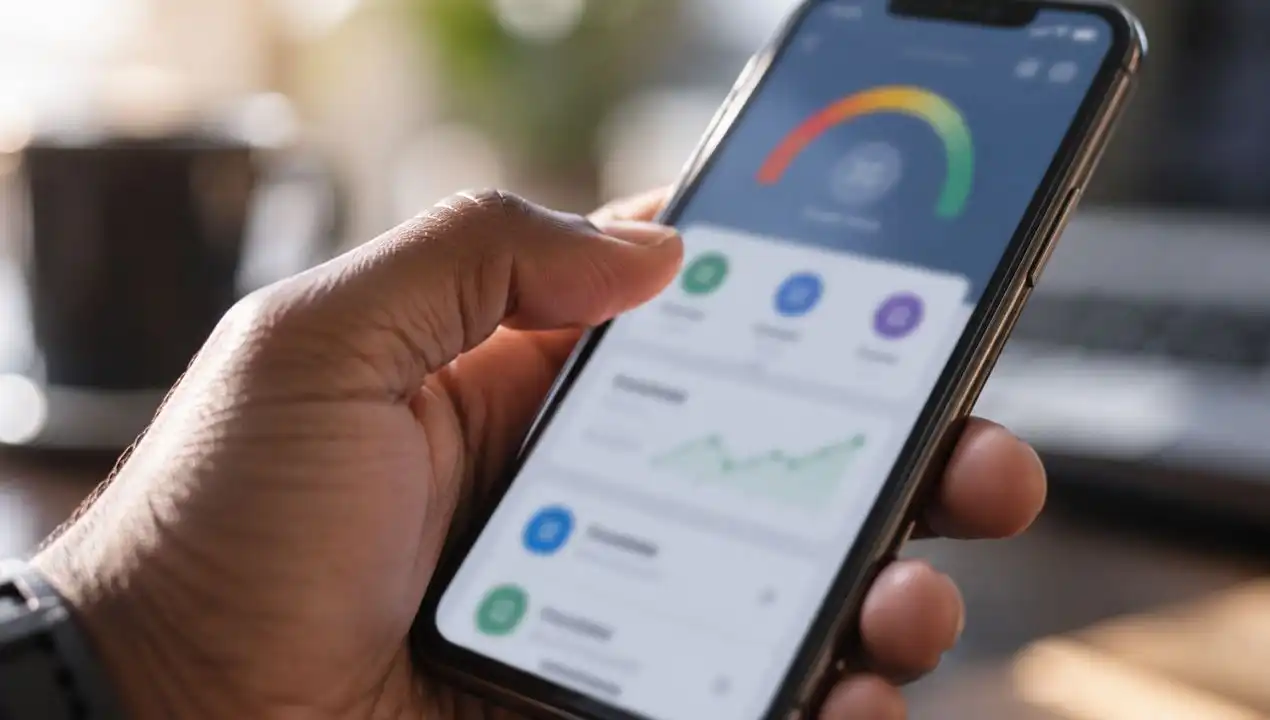
You can check your credit score directly through a registered credit bureau such as Experian or TransUnion. South African consumers are entitled to at least one free credit report per year from each credit bureau, and some bureaus now provide more frequent or unlimited free access.
Checking your credit profile is useful before applying for a loan, vehicle finance, a credit card, a cellphone contract or other credit. It can also help you spot incorrect information or signs that someone may have used your identity without permission.
Where can you check your credit score?
You can check your credit profile through several registered South African credit bureaus. The main consumer-facing options include Experian, TransUnion, XDS and Consumer Profile Bureau.
Experian
Experian provides free access to your credit report and credit score through Up powered by Experian.
The service includes:
- Credit score
- Full credit report
- Payment history
- Credit account information
- Negative information such as defaults and judgments
- Online dispute submission
Experian currently provides South African consumers with unlimited free access to their Experian credit report and score.
TransUnion
TransUnion provides South African consumers with a free credit report once every 12 months.
The report can help you review your payment history, credit accounts and adverse information and identify possible errors or signs of identity theft.
TransUnion also offers additional paid credit-monitoring services, but you do not need to pay to access your statutory annual report.
XDS
XDS provides consumers with access to their credit profile through Splendi.
The service gives you:
- Your XDS credit report
- Your XDS credit score
- Online access to your profile
- The ability to dispute incorrect information
XDS says consumers can access their credit reports through Splendi free of charge and can return to the service whenever they need to review their profile.
Consumer Profile Bureau
Consumer Profile Bureau, commonly known as CPB, is another registered South African credit bureau.
CPB operates My Free Credit Report, which provides consumers with access to personal credit information. Its current website terms identify Consumer Profile Bureau as a registered South African primary credit bureau and list MyFreeCreditReport.co.za as one of its consumer services.
What about Compuscan?
Compuscan was acquired by Experian, so it should not be treated as a completely separate major bureau in the same way it once was.
Some older consumer guides and services may still refer to Compuscan or its previous consumer reporting channels, but Experian is now the more appropriate primary point of reference for that credit-data group.
Are there other registered credit bureaus?
There are many more credit bureaus registered with the National Credit Regulator.
Not all of them provide the same consumer-facing credit-score service, and some specialise in particular types of credit information, business information or industry services.
The NCR maintains the official register of registered credit bureaus. If a service claims to be a South African credit bureau, you can verify its registration there before submitting personal information.
Which credit bureau should you use?
There is no reason to rely on only one bureau.
Because different bureaus may hold different information and use different scoring models, checking more than one report can give you a broader picture of your credit profile.
A practical starting point is:
- Experian for free ongoing access to your Experian score and report.
- XDS Splendi for free access to your XDS profile and score.
- TransUnion for your annual TransUnion report.
- Consumer Profile Bureau for another view of the information recorded against your profile.
If you are preparing for an important credit application, such as a home loan or vehicle finance, checking several reports can also help you identify discrepancies that may appear on one bureau but not another.
How do you check your credit score with Experian?
Experian allows South African consumers to access a free credit report and score through its Up platform.
The basic process is:
- Register on the Experian Up platform.
- Verify your identity.
- Provide the required identification information.
- Access your credit report and credit score.
- Review the accounts, payment history and other information shown.
Experian currently says its platform provides free unlimited access to credit reports and scores for South African consumers. It may request identification and proof of residence as part of verification.
Experian uses a score range of 0 to 999, with a higher score generally indicating a stronger credit profile on its scoring model.
How do you check your credit report with TransUnion?
TransUnion allows South African consumers to request one free credit report each year.
The report can show information such as your payment behaviour, credit accounts and adverse court action.
TransUnion also offers products that include credit scores, alerts and more frequent monitoring, but you do not need to pay simply to exercise your right to an annual free credit report.
Is checking your own credit score bad for your score?
Checking your own credit report is not the same as applying for new credit.
A credit report may record enquiries made by lenders or other authorised organisations, but reviewing your own profile is part of managing your credit information and does not mean you have applied for another loan or account.
The important distinction is between monitoring your own credit profile and having multiple lenders assess you because you are making repeated credit applications.
What information appears on a credit report?
Your credit report can contain much more than a single score.
Depending on the bureau, it may include:
- Credit accounts
- Outstanding balances
- Payment history
- Missed or late payments
- Closed accounts
- Credit enquiries
- Defaults
- Judgments
- Debt collection information
- Personal and contact information
Experian says its reports can include credit accounts, payment behaviour, balances, negative information, judgments and debt collection records.
TransUnion similarly describes a credit report as a record of your financial history and payment behaviour based on information supplied by lenders and service providers.
What does your credit score actually mean?
Your credit score is a numerical assessment based on information contained in your credit profile.
A higher score generally suggests that the credit bureau’s model sees you as lower risk, while a lower score may indicate greater perceived risk.
The score is only one part of a credit decision.
A bank or other lender may also consider your income, affordability, employment information, existing debt and its own internal lending criteria. TransUnion specifically notes that different lenders use different factors and that a good bureau score does not guarantee approval.
This means there is no single credit score that automatically guarantees that every lender will approve you.
Why can your score differ between credit bureaus?
Your score may differ because credit bureaus can use different scoring models and may not hold exactly the same information at exactly the same time.
Experian, for example, uses its own 0 to 999 scoring model. Other bureaus may use different ranges or methodologies.
For that reason, comparing a number from one bureau directly with a number from another can be misleading.
It is often more useful to look at the overall condition of your credit profile and whether your payment history, balances and account information are accurate.
How often should you check your credit report?
Checking your credit report at least a few times a year can help you identify problems before you need to apply for credit.
At minimum, make use of the free access available to you.
South African consumers have a legal right to a free credit record from each credit bureau every year.
Some services provide more frequent access, making it easier to monitor changes throughout the year.
Checking your report can be especially useful before:
- Applying for a home loan
- Financing a vehicle
- Taking a personal loan
- Applying for a credit card
- Opening a retail account
- Entering a new cellphone contract
That gives you time to correct mistakes before a lender reviews your profile.
What should you check on your credit report?
Do not look only at the score.
Review the actual information behind it.
Check whether:
- Your personal details are correct
- All listed accounts belong to you
- Account balances look reasonable
- Payments are being recorded correctly
- Closed accounts are reflected accurately
- There are accounts you do not recognise
- Judgments or defaults are correct
- Credit enquiries are legitimate
Incorrect information can make your credit profile look weaker than it really is.
Unfamiliar accounts or enquiries can also be an early warning sign of identity theft or fraud. TransUnion specifically recommends regular report checks as a way to identify possible fraudulent activity.
What should you do if your credit report is wrong?
You have the right to challenge inaccurate information.
The National Credit Act gives consumers the right to challenge information held by a credit bureau and requires disputed information to be investigated without charging the consumer.
Start by submitting the dispute to the credit bureau that issued the report.
Include supporting documents where possible, such as:
- Proof of payment
- Paid-up letters
- Account statements
- Correspondence from the credit provider
- Identification documents
Under current NCR guidance, a credit bureau or other responsible party has 20 business days to investigate disputed credit information and either provide credible evidence supporting the information or remove it if it cannot be substantiated.
Experian also states that disputes submitted through its platform are investigated within 20 business days.
What if the dispute is not resolved?
If a credit-bureau dispute is not resolved satisfactorily, the matter can be escalated.
The National Credit Regulator provides guidance for complaints relating to disputed consumer credit information and can investigate complaints under the National Credit Act.
Keep copies of your original dispute, supporting documents and the bureau’s response. This makes it easier to show what has already been done if the complaint needs to be escalated.
Can checking your credit report help prevent fraud?
Regular credit monitoring can help identify activity that does not belong to you.
For example, an unfamiliar account or credit enquiry could indicate that someone has attempted to use your identity.
TransUnion notes that credit reports can help consumers identify possible identity theft and fraud, while credit-monitoring products can provide alerts when information on a profile changes.
If you see an account you do not recognise, contact the relevant credit bureau and credit provider as soon as possible.
Do you need to pay to know your credit standing?
You do not need to pay simply to access basic credit information.
South African law gives you access to at least one free credit report per year from each credit bureau.
Some bureaus go further. Experian currently provides free unlimited access to its credit report and score through Up, while TransUnion provides its statutory free annual report and offers optional paid monitoring services.
Paid monitoring can be useful for some people, but it is not required just to check whether your credit profile is healthy.
What should you do after checking your score?
Use the score as a starting point, then look at the information influencing it.
If your report is accurate but your profile is weak, focus on the basics:
- Pay accounts on time
- Avoid missing instalments
- Keep debt manageable
- Avoid applying for unnecessary credit
- Check your report for errors
- Monitor accounts for fraudulent activity
A credit score does not change because of one trick or shortcut. It reflects the broader information in your credit profile.
If you are planning to apply for important credit such as vehicle finance or a home loan, checking your report early gives you time to understand what lenders are likely to see and correct any errors before you apply.

1 Comment
Pingback: How to Improve Your Credit Score in South Africa