

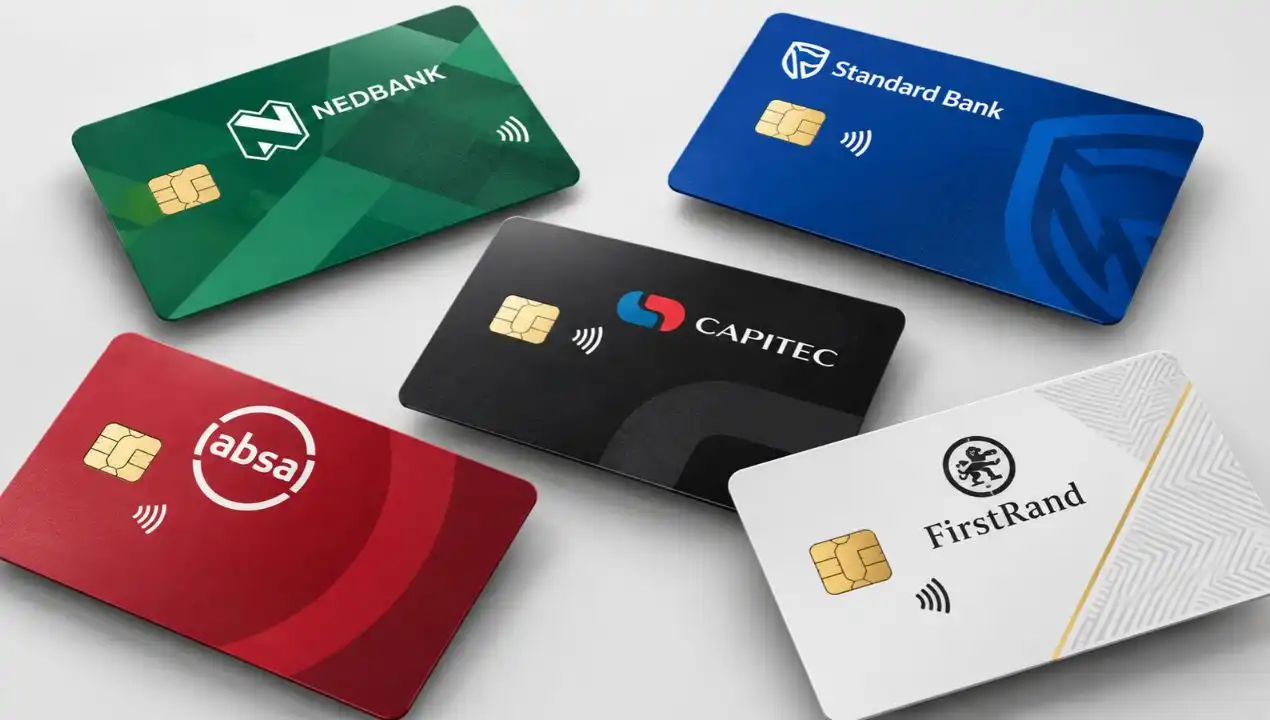
The best bank account is not simply the one with the lowest monthly fee. You should compare the full cost of using the account, how easy it is to access your money, what digital services are included, whether you earn interest, and what happens when you need services such as cash withdrawals, debit orders or immediate payments.
A cheaper account can become more expensive if you pay extra for transactions you use regularly.
Start with the monthly account fee
The monthly fee is the easiest cost to compare, but it is only the starting point.
Some accounts charge a flat monthly fee that includes a bundle of transactions. Others have a lower base fee but charge separately for:
- Cash withdrawals
- Debit orders
- EFTs
- Immediate payments
- ATM deposits
- Branch transactions
- Cash deposits
The Banking Association South Africa’s Code of Banking Practice says banks should disclose the fees and charges that apply to their products, including additional charges that may arise when an account becomes overdrawn, a debit order is returned or other account conditions are triggered.
When comparing accounts, estimate what you actually do in a normal month rather than looking only at the advertised monthly fee.
Compare the total monthly cost
A bank account that costs R0 or R10 per month can still be expensive if you regularly pay transaction fees.
Think about your normal banking behaviour.
For example, do you:
- Withdraw cash several times a month?
- Use debit orders?
- Send money to other banks?
- Deposit cash?
- Make immediate payments?
- Use your card mostly for purchases?
- Visit a branch?
The best account for someone who works almost entirely digitally may be different from the best account for someone who relies heavily on cash.
Check how much cash withdrawals cost
Cash can be one of the more expensive ways to use a transactional account.
Banks may charge differently depending on whether you use:
- Their own ATM
- Another bank’s ATM
- A retailer’s till
- A branch
- Cardless cash withdrawal
If you withdraw cash frequently, this can have a bigger effect on your monthly banking cost than the account fee itself.
A useful comparison is not simply “Does this account allow ATM withdrawals?” but “How much will my normal cash usage cost each month?”
Compare cash deposit fees too
Cash deposits are particularly important for people who earn part of their income in cash or run small businesses.
Some accounts include limited deposits, while others charge according to the amount deposited or the channel used.
If you rarely handle cash, this may not matter.
If you deposit several thousand rand every month, it can become one of the most important account features to compare.
Look at debit-order charges
Many households use debit orders for expenses such as:
- Insurance
- Medical aid
- Subscriptions
- Vehicle finance
- Home loans
- Gym memberships
- Internet services
Check whether ordinary debit orders are included in the monthly package or charged separately.
Also look at what happens when a debit order fails because there is not enough money in the account.
Returned debit orders can attract additional charges, and repeated failures can create other problems with the service provider. Banking industry rules require banks to disclose additional charges such as those associated with returned debit orders.
How much do EFTs and immediate payments cost?
Digital transfers are now part of everyday banking, but not every transfer is priced the same way.
A standard EFT may be free or included, while an immediate or real-time payment can carry a separate fee.
Compare:
- Normal EFT fees
- Immediate payment fees
- Payment limits
- Processing times
- Whether certain payments are included in your monthly bundle
If you frequently need money to reach someone immediately, the price of instant payments can matter more than it first appears.
Does the bank support modern payment options?
Digital payment features can make a large difference to everyday convenience.
Useful features can include:
- Contactless card payments
- Digital wallets
- QR payments
- Instant account-to-account payments
- Payment notifications
- Virtual cards
- Cardless payments
- Scheduled payments
These features are becoming more important as South Africa’s payments system modernises and more transactions move away from cash.
You do not need every possible feature, but the account should support the way you prefer to pay.
How good is the banking app?
For many people, the banking app is effectively the bank branch.
Before choosing an account, consider whether the app allows you to:
- Make payments
- Add beneficiaries
- Manage cards
- Change payment limits
- Download statements
- Buy prepaid services
- Report a lost card
- Freeze or unfreeze cards
- Change PINs
- Manage debit orders
- Open additional savings products
A good app can save time and reduce the need for branch visits.
A poorly designed or unreliable app can make even a low-cost account frustrating to use.
Can you use a virtual card?
Virtual cards can add flexibility for online purchases.
A virtual card usually exists inside your banking app rather than as a physical card.
Depending on the bank, you may be able to:
- Use it for online shopping
- Add it to a digital wallet
- Create separate cards for different purposes
- Replace it quickly if details are compromised
If you shop online regularly, this can be a useful security feature.
Compare fraud and security controls
Security should be part of your bank-account comparison, not an afterthought.
Useful controls can include:
- Real-time transaction notifications
- Card freezing
- Online-payment controls
- Spending limits
- Biometric login
- Two-factor authentication
- Fraud alerts
You should also understand how easy it is to reach the bank if something goes wrong.
A low-cost account is less attractive if resolving a fraudulent transaction becomes unnecessarily difficult.
Does the account earn interest?
Many transactional accounts pay little or no interest on everyday balances.
Some accounts, however, offer interest or make it easy to move excess money into linked savings accounts.
If you regularly leave a large balance in your current account, compare:
- Interest rate
- Balance required to earn interest
- Whether the rate changes at different balance levels
- How often interest is calculated
- Whether a linked savings account offers a better return
Do not assume that keeping more money in a transactional account automatically earns a competitive return.
What is the difference between a transactional and savings account?
A transactional account is designed primarily for receiving income, making payments and handling everyday banking.
A savings account is designed mainly for holding money and may offer a higher interest rate.
You may not need to choose one or the other.
Many people use a transactional account for everyday expenses and a separate savings account for emergency funds or short-term goals.
The important question is whether your bank makes it easy and inexpensive to move money between them.
Does the account offer an overdraft?
An overdraft lets you spend more than the positive balance in your account, up to an approved limit.
This can provide short-term flexibility, but it is still credit.
Before using an overdraft, compare:
- Interest rate
- Monthly facility fee
- Initiation or service fees
- Limit
- Repayment conditions
The Banking Association’s Code of Banking Practice specifically notes that banks should disclose charges associated with overdrawn accounts and exceeding an overdraft limit.
An overdraft should not be treated as extra salary.
Is the debit card included?
Check whether the physical debit card is included in the account fee.
You should also look at:
- Replacement-card fee
- Delivery fee
- Additional-card fee
- International transaction fee
- Foreign exchange charges
- Contactless-payment support
These costs may be small individually but can add up over time.
What happens if you travel internationally?
If you travel or buy from international websites, check how the bank handles foreign transactions.
Possible costs include:
- Currency conversion margins
- Foreign transaction fees
- International ATM fees
- International card-use charges
An account that works well domestically may be expensive abroad.
Frequent travellers should compare these charges separately.
Does the bank have branches you can actually use?
Digital banking has reduced the need for branches, but physical access still matters for some customers.
Consider:
- Whether there is a branch near you
- Branch operating hours
- Whether cash services are available
- Whether complex queries can be handled there
- Whether appointments are required
If you almost never use branches, this may have little value.
If your work or personal circumstances require regular branch visits, location and service quality become important.
What ATM network can you use?
A large ATM network can make cash access cheaper and easier.
Check:
- Number of ATMs near your home and workplace
- Charges at the bank’s own ATMs
- Charges at other banks’ ATMs
- Availability of cardless withdrawals
An account with low ATM fees is less useful if there are no convenient machines where you live or work.
Can you withdraw cash at retailers?
Retail cash withdrawals can sometimes be cheaper and more convenient than using an ATM.
Depending on the bank and retailer, you may be able to withdraw cash when paying for groceries or other purchases.
For someone who only needs small amounts of cash occasionally, this can reduce ATM costs.
How easy is it to receive your salary?
Most transactional accounts can receive salary payments, but the broader features still matter.
Look at whether the account supports:
- Salary deposits
- Scheduled transfers
- Debit orders
- Proof of payment
- Downloadable statements
- Notifications when money arrives
If the account will become your main salary account, reliability is more important than promotional extras.
Should you compare rewards programmes?
Rewards can be useful, but they should not determine your decision on their own.
A rewards programme only has value if:
- You qualify for the benefits
- You naturally use the participating services
- The rewards exceed any additional fees
- You do not spend more just to earn rewards
Do not choose an expensive bank account solely because it offers points, discounts or cashback.
Work out the actual value you are likely to receive.
Are fee discounts worth considering?
Some accounts reduce or waive fees if you meet certain conditions.
These might include:
- Maintaining a minimum balance
- Receiving a salary into the account
- Completing transactions digitally
- Holding several products with the bank
These discounts can be valuable if you meet the requirements naturally.
They are less useful if you need to change your financial behaviour or buy additional products just to qualify.
What happens if your balance reaches zero?
Understand how the account behaves when there is not enough money available.
Ask whether:
- Transactions are declined
- Debit orders are returned
- The account can go into an unauthorised overdraft
- Penalty fees can apply
- Certain monthly fees can still be charged
This is particularly important for people whose income varies from month to month.
Check the minimum balance requirements
Some accounts require no minimum balance.
Others may require you to keep a certain amount in the account to qualify for benefits, earn interest or avoid fees.
Money kept purely to satisfy a minimum balance has an opportunity cost because it could potentially earn more elsewhere.
Compare the benefit you receive with the amount you must keep in the account.
What happens when you need customer support?
Customer service is difficult to measure from a fee schedule, but it matters when something goes wrong.
Consider the channels available:
- In-app support
- Phone support
- Branch service
- Secure messaging
- Chat
- Fraud hotline
Also check whether support is available outside normal office hours.
Fast access to assistance is particularly important for fraud, lost cards and blocked transactions.
Are your deposits protected if the bank fails?
South Africa now has a formal deposit-insurance system.
The Corporation for Deposit Insurance, or CODI, protects qualifying deposits at member banks up to R100,000 per qualifying depositor per bank if a bank is placed into resolution and the relevant payout rules apply.
Qualifying products can include transactional accounts, current accounts, savings accounts and certain term or notice deposits.
All qualifying local banks regulated under the relevant South African banking legislation are automatically CODI members.
This protection is automatic. You do not need to register or pay separately for it.
Does CODI cover more than R100,000 if you have several accounts?
Not at the same bank.
The R100,000 limit generally applies per qualifying depositor, per bank, not per account.
If you had R80,000 in one savings account and R50,000 in another qualifying account at the same bank, your combined qualifying deposits would be R130,000. CODI protection would generally be limited to R100,000 at that bank.
If qualifying deposits are held at separate banks, the R100,000 limit applies separately at each bank.
For people holding larger cash balances, that is worth understanding.
Should you choose a bank only because it is well known?
Brand recognition can provide reassurance, but it should not replace comparison.
A smaller or newer bank may offer:
- Lower fees
- Better digital tools
- Higher savings rates
- Simpler pricing
A large established bank may offer:
- More branches
- More ATMs
- Broader product ranges
- More sophisticated business or investment services
The better choice depends on which features you actually need.
Should you keep everything with one bank?
Using one bank for everything can be convenient, but it is not always financially optimal.
You might decide to use:
- One bank for your salary and daily payments
- Another for high-interest savings
- A separate investment platform
- A different provider for a credit card
There is no rule requiring every financial product to come from the same institution.
The main trade-off is convenience versus getting better pricing or features elsewhere.
Which features matter most for students and young workers?
If you are starting your career, focus first on features you will use regularly.
That usually means:
- Low total fees
- Good mobile banking
- Affordable transfers
- Low cash-withdrawal costs
- Easy debit-order management
- Virtual cards
- Reliable notifications
- Accessible support
Rewards and premium benefits can come later.
A simple account that handles your salary and everyday transactions efficiently is often more useful than a premium account filled with features you rarely use.
What should you compare before opening an account?
A practical bank-account comparison should include:
| Feature | What to check |
|---|---|
| Monthly fee | Fixed account charge |
| Card purchases | Whether local purchases cost extra |
| Cash withdrawals | Own ATM, other ATM and retailer fees |
| Cash deposits | Cost per deposit or amount |
| EFTs | Standard transfer fees |
| Instant payments | Fees and limits |
| Debit orders | Normal and failed debit-order charges |
| Mobile app | Features and reliability |
| Virtual cards | Availability and controls |
| Interest | Rate paid on positive balances |
| Overdraft | Interest and facility charges |
| Rewards | Real value after fees |
| International use | FX and foreign transaction costs |
| Branches and ATMs | Availability where you need them |
| Customer support | Channels and operating hours |
| Deposit protection | Whether qualifying deposits fall under CODI |
This gives you a much better picture than comparing monthly fees alone.
Which bank account should you choose?
Choose the account with the lowest total cost and best practical features for the way you actually manage money.
If you bank digitally, rarely use cash and make frequent transfers, prioritise low digital transaction costs and a strong app.
If you handle cash regularly, ATM and deposit fees deserve more attention.
If you keep significant savings in the account, compare interest and consider whether a separate savings product would work better.
The best account is therefore not necessarily the cheapest, most popular or most heavily advertised one. It is the account whose pricing and features fit your actual financial habits.
